


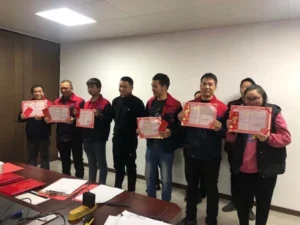



The China International Beauty Expo is a renowned trade exhibition. Bringing together premium brands and industry elites, it serves as an ideal one-stop sourcing platform for professionals in the sector. Throughout the event, a series of compelling academic and commercial activities—along with high-level forums—are held. Covering diverse topics such as beauty, hairdressing, spa services, and packaging, these sessions feature invited experts, scholars, and industry leaders who share insights on the latest technologies, market trends, and industry developments.
- Navigating the Ever-Changing Competitive Landscape
The current competitive landscape in China is unprecedented in its intensity. With a mix of multinational corporations, joint ventures, private enterprises, and dominant state-owned firms operating across every sector, the “blue ocean” (untapped market space) has effectively vanished; everyone is now battling within a “red ocean” (highly saturated, fiercely competitive market). This reality demands that entrepreneurs continuously learn and broaden their thinking. In an era of global economic integration, how can a company build a competitive advantage to fuel international expansion? How can it balance local characteristics with broader operational harmony? How can it stand out amidst intensifying future competition? As entrepreneurs strive to build world-class enterprises, these are critical questions that must be addressed. Consequently, learning is not merely optional—it is an absolute necessity, an investment that entrepreneurs make in the future of both their businesses and themselves. - Continuous Learning as a Response to Competitive Pressure
The old adage “live and learn” has evolved into a new, widely accepted mantra among entrepreneurs: “you must keep learning to keep surviving.” You may choose not to learn, but your competitors certainly won’t! Experience has shown that today’s business world is no longer defined by “big fish eating small fish,” but rather by “fast fish eating slow fish.” The volatility of the market—seen in the shifting dynamics of finance, stock markets, and real estate—reflects the current state of the domestic landscape. Entrepreneurs must remain vigilant even in times of stability; they must be able to look beyond the dangers inherent in a treacherous marketplace to identify the opportunities that lie within. By learning how to seize and harness these opportunities, entrepreneurs can ensure the long-term development and sustainability of their enterprises. 3. Seeking New Development: Addressing Weaknesses Through Learning
The average lifespan of a Chinese enterprise is only 3–5 years. This suggests that entrepreneurs need to broaden their strategic vision and elevate their overall perspective. While diversification, capital operations, mergers, and restructuring are effective tools for rapid growth, do we truly understand them? Entrepreneurs must possess not only the ability to secure capital but also the capacity to acquire and integrate intellectual resources. This helps mitigate the risks associated with change, fosters a deep understanding of the enterprise as a systemic entity, and enables the addressing of organizational weaknesses through continuous learning. - Personal Development Necessitates Ongoing Learning
As enterprises grow and expand, are entrepreneurs still relying on outdated management mindsets? While there is a strong emphasis on leadership, do we truly grasp the nuances of organizational behavior? Learning allows entrepreneurs to re-evaluate their own positioning. Enhancing capabilities in strategic management, operational control, human resource allocation, financial management, and market expansion remains a constant, essential pursuit for any entrepreneur. - Continuous Learning to Keep Pace with a Changing Environment
Learning provides immediate benefits, and a commitment to lifelong learning yields lifelong rewards. As society evolves and markets shift, enterprises must constantly adapt and innovate. Since the entrepreneur is the key driver of a company’s growth, they must embrace a philosophy of continuous learning. This allows them to introduce fresh perspectives into the organization, achieving a state of total alignment—a seamless integration—between the entrepreneur and the enterprise.
